What does a payment solution for Driving Range cost - and what does it cost not to use it?
A realistic review of costs, time spent and earnings at the driving range.
When golf clubs consider investing in a driving range payment solution, the direct costs are often the biggest factor in the decision. What does the system cost? And what is the monthly price?
But that's only one side of the equation.
The other - and often overlooked - side is what it already costs to operate the rank with traditional solutions like tokens, coins or legacy card or chip systems.
The hidden drift: Hours that disappear
In many clubs, the driving range is still handled via manual processes. It may seem simple, but in practice it requires ongoing time from staff or volunteers.
Typically, time passes:
- Token sales in the clubhouse
- Payment management and reconciliation
- Filling of any vending machines for token sales
- Daily emptying and counting of tokens
- Ordering new tokens (incl. delivery and cost)
Even in a smaller club, this can quickly add up. It is not uncommon for a total of 30–40 hours a year to be spent – often more during peak season. This is time that either costs wages – or ties up resources that could be better used elsewhere in the club.
Card and Chip systems: Not as automatic as they sound
Some clubs have tried to modernise with chip cards or membership cards. This removes the need for physical tokens, but introduces a different type of administration.
This is where members:
- Meet up at the clubhouse during opening hours
- Top up your card balance
- Pay via staff or terminal
For the club, it means:
- Balance and payment management
- Support for members with problems
- Ongoing map and system management
It may be an improvement - but it's still not a frictionless solution for either club or player. Not to mention that the player still has to leave the driving range to top up the balance and then go back - which often doesn't happen.
What does it really cost?
If you put numbers to it, the difference starts to become clear.
Let's take a cautious example:
- 40 hours of annual time commitment
- An internal hourly rate of e.g. 200 DKK
This equates to DKK 8,000 per year - in working hours alone.
In addition:
- Purchasing tokens or NFC membership cards
- Loss of tokens over the season
- Maintenance of vending machines
- Administration and small errors
Suddenly, the “free” or cheap solutions aren't necessarily so cheap.
What about a modern payment solution?
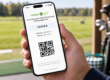
A digital payment solution moves much of this administration away from the club.
Payment is made directly at the machine or in the app, and there is no need to:
- Sales in the clubhouse
- Managing physical devices
- Manual counting or voting
This reduces time spent significantly - and in many cases, almost completely.
At the same time, it opens up for increased revenue because more players actually use the rank when it's easy to pay.
Expense vs. investment
The central question is therefore not just: What does the system cost?
But rather: What is the net benefit?
When you combine:
- saved labour hours
- Reduced operating costs
- Increased use of the rank
- higher revenue
many clubs will find that a payment solution not only finances itself - but also creates a profit.
A better experience for everyone
In addition to the economy, there is also a practical benefit.
Players don't have to:
- Think cash or tokens
- Adhere to opening hours
- plan their training in advance
This makes it easier to use the rank spontaneously - and it increases activity.
What does that mean for your club?
Every club is different and the exact equation depends on both size and usage patterns.
But one thing is consistent:
When you factor in time, operations and lost potential, the overall picture is often different than initially thought.
If you want to see what it looks like for your club, you can use our ROI calculator to get a quick overview of both costs and earnings.