Can a payment system at a driving range pay for itself?
An introduction to the economics of modern driving ranges – and why more golf clubs are seeing the range as a revenue stream rather than an expense.
For many golf clubs, the driving range has traditionally been a service for members rather than a real business. Balls have been free or required coins and tokens, and the focus has been more on operations than on revenue. However, with changing player expectations and increasing demands on facilities, this picture is beginning to change.
Today, several clubs are starting to ask a new question: Can the driving range be a stable and self-financing source of income?
From cost to revenue
One of the biggest challenges with traditional solutions is accessibility. If the player has to find cash or go back to the club house to buy tokens, the range is in practice used less. This doesn't necessarily mean a lack of interest – but that the friction is too high.
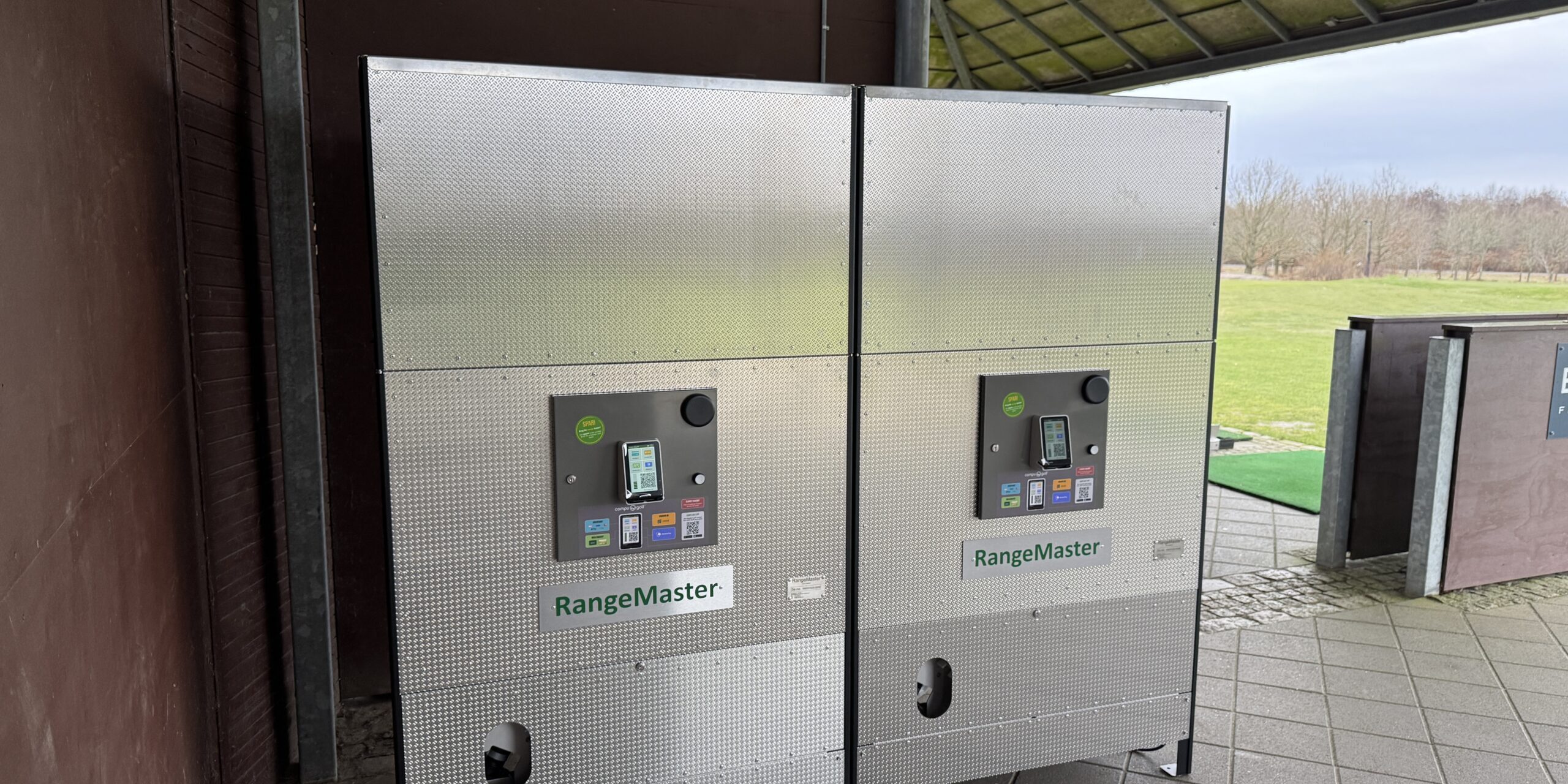
However, when payment is made directly at the ball machine with card, mobile, or app, behaviour changes. It becomes easy and spontaneous to hit a bucket of balls, and this has a direct effect on revenue.
For many clubs, this is precisely where the financial potential starts to become apparent.
What is the potential in a “typical” golf club?
Looking at an average golf club, there is often a combination of members and green fee guests, which together make up a significant volume. Many clubs have in the region of 800–1,000 members and several thousand guests annually.
If even a portion of these customers use the driving range on a paid basis, it generates an ongoing revenue stream which was previously limited, or didn't exist at all. At the same time, experience shows that guests who visit the Driving Range use an average of 1.2 baskets of balls once they decide to practice.
The overall result naturally depends on local conditions, but the common denominator is that even a moderate payment rate can make a noticeable difference.
If you want to see what that concretely means for your club, you can Try our ROI calculator for free, which gives an estimate based on your own figures.
Can the investment pay for a new ball machine?
One of the most relevant questions for many clubs is whether the income from a payment solution can actually finance equipment and improvements.
A modern ball machine typically costs between £50,000 and £100,000. For many clubs, increased and stable earnings from the driving range could cover a significant portion of this investment over a few years – and in some cases, the entire amount.
It changes the perspective on the investment. Instead of being an expense, the driving range becomes an active part of the club's finances.
Better facilities create more activity
When the range starts to generate a surplus, it simultaneously creates scope for continuous improvements. This could be the replacement of worn balls, new tee mats, or better goals and practice areas.
These improvements have a self-reinforcing effect. A more attractive driving range is used more – and higher activity, in turn, leads to increased revenue.
At the same time, the quality of training facilities plays an increasingly important role in both retaining and recruiting members. In particular, newer and younger players today expect modern and easily accessible solutions.
An investment in the whole club
The effect of a payment system doesn't stop at the rank itself. When more players use the facilities, overall activity in the club increases. This can have a ripple effect on everything from training and lessons to the shop and café.
Therefore, the decision is not just about payment – but about elevating the club's entire offering and creating a better overall experience.
Next step
There isn't a one-size-fits-all solution for clubs. But the trend is clear: for many golf clubs, a payment system for the driving range can help create a stable income that can both finance equipment and strengthen the club's development.
In the upcoming articles, we will delve deeper into concrete examples, figures, and experiences from clubs that have already taken the step.
If you already want to see the potential for your own club, you can use our ROI calculator and get a quick overview.